Source Waterproof Transparent Stand Up Bag for Food, Gift, and Cosmetic Packaging
Find 30 waterproof transparent stand up bag options from suppliers in Guangdong, China. Buyers can compare features like moisture barriers, zipper fasteners, and custom thicknesses for food, gift, and cosmetic packaging needs.
Key considerations
Products List




Comprehensive Sourcing Guide
Strategic Sourcing Guide for Waterproof Transparent Stand Up Bags
Understanding Technical Specifications and Material Architecture
When sourcing waterproof transparent stand-up bags, the primary objective is to identify a product that balances barrier properties with visual clarity. The market offers a diverse array of configurations, but the core technical requirements for a "waterproof" and "transparent" designation rely heavily on the material structure and thickness specifications. Based on available industry data, the material composition often involves multi-layer laminates such as PET/Ny/Al/PE or specific combinations like PET/PE (CPP). While some listings indicate the use of PVC or OPP (Oriented Polypropylene) for specific applications, the most robust waterproof performance typically stems from the inclusion of aluminum foil layers or specialized PE coatings that prevent moisture ingress.
The thickness of the bag is a critical determinant of its durability and barrier efficacy. Observed specifications in the current market range from 60 microns to 90 microns on a single side, with options for customized thicknesses available to meet specific load-bearing or protection needs. For applications requiring high moisture resistance, such as food or medical packaging, a thickness of at least 70 microns is often recommended to ensure structural integrity. The transparency of the bag is equally vital; while some materials like aluminum foil are inherently non-transparent, the "transparent" requirement in this context usually points to clear PET or OPP layers that allow product visibility while maintaining a moisture barrier. Buyers must verify that the "transparent" claim refers to the outer layer and that the internal structure does not compromise the visual appeal required for retail display.
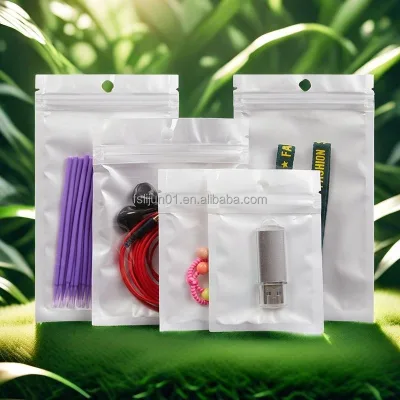
The manufacturing process for these bags typically involves plastic packaging techniques that ensure the layers are fused correctly. The shape is predominantly "upright," allowing the bag to stand independently on shelves, which is essential for gift, cosmetic, and clothing packaging. The fastening mechanism is another key technical variable; many high-performance options feature a zipper top, which provides a resealable seal that enhances the waterproof claim by preventing liquid ingress after the initial opening. The availability of up to 13 color options allows for branding, but the base material must remain clear to satisfy the transparency requirement.
Compliance, Certification, and Regulatory Verification
Navigating the regulatory landscape for packaging materials requires rigorous verification of certifications, particularly when the bags are intended for food, cosmetic, or medical applications. The supply chain for these products often cites certifications such as BV, SGS, FDA, and Ect. These designations indicate that the materials have undergone third-party testing for safety and quality standards. For instance, FDA certification is a critical benchmark for any packaging intended to come into direct contact with food products, ensuring that the materials do not leach harmful substances. Similarly, BV and SGS certifications provide assurance regarding the manufacturing quality and the consistency of the raw materials used.
However, buyers must exercise caution when interpreting certification claims. The presence of a certification label does not automatically guarantee that every batch of a specific model number meets the standard. It is imperative to request current, batch-specific test reports that align with the intended application. For example, if the bag is to be used for medical packaging, the certification must explicitly cover medical-grade compliance, not just general industrial use. The provided data also mentions "CE" as a potential certification, though this is often associated with broader product safety rather than specific food-contact materials. Buyers should verify if the CE mark applies to the machinery used in production or the final product itself, as this distinction impacts liability and market access in regions like the European Union.
Furthermore, the "customized" nature of many of these products means that standard certifications may not cover custom modifications. If a buyer requests a specific thickness, a unique zipper type, or a custom logo application, the supplier must confirm that these customizations do not void existing certifications. The raw materials, whether PET, Nylon, Aluminum Foil, or PE, must be sourced from suppliers who adhere to strict quality control protocols. The "recycled materials" feature mentioned in some listings adds another layer of complexity; while sustainable, recycled content must be verified to ensure it does not introduce contaminants that would violate FDA or other food-safety standards.
Cost Drivers and Pricing Variables
The pricing structure for waterproof transparent stand-up bags is influenced by a complex interplay of material costs, customization levels, and order volume. The observed price range in the market spans from $0 to $16,870, a wide variance that reflects the difference between small sample orders and large-scale industrial procurement. The primary cost driver is the material structure. Bags utilizing multi-layer laminates like PET/Ny/Al/PE are generally more expensive than single-layer OPP or PVC bags due to the complexity of the lamination process and the cost of raw materials, particularly aluminum foil.
Thickness is another significant factor. As noted, thickness options range from 60 to 90 microns and beyond. Increasing the thickness directly increases the amount of raw material required per unit, thereby raising the cost. Buyers seeking high-performance moisture barriers will inevitably face higher unit costs compared to those opting for standard, thinner gauges. The customization of the bag also plays a pivotal role in pricing. Customized thickness, specific dimensions (ranging from 6x10 cm to 14x23 cm and beyond), and unique color requirements (up to 13 colors) all add to the production complexity and cost.
Order volume is the third major variable. The Minimum Order Quantity (MOQ) observed in the market ranges from 1 unit to 50,000 units. High MOQs often correlate with lower unit prices due to economies of scale, while low MOQs or single-item orders typically carry a premium. The "Selling Units" are often listed as single items, which suggests that buyers can start with small quantities, but the per-unit cost will be significantly higher. Additionally, the printing method, such as silk screen printing, adds to the cost. Complex multi-color printing or custom logos require additional setup time and ink, which are factored into the final price. Buyers should be aware that "customized" standard specifications may incur setup fees that are not immediately visible in the base price.
Typical Applications and Functional Requirements
The versatility of waterproof transparent stand-up bags makes them suitable for a broad spectrum of industrial uses. The primary applications identified include gift packaging, food packaging, cosmetic packaging, and clothing packaging. In the food industry, the moisture barrier function is critical for preserving the freshness of dry goods, snacks, or powders. The waterproof performance ensures that external humidity does not degrade the product quality, while the transparency allows consumers to inspect the contents without opening the package.
For cosmetic and gift packaging, the aesthetic appeal is paramount. The ability to customize colors up to 13 options, combined with the upright shape and clear visibility, makes these bags ideal for high-end retail displays. The "Double Open" feature and zipper fasteners add functionality, allowing for easy access and resealing, which is particularly valuable for travel-sized cosmetics or reusable gift items. In the clothing sector, these bags serve as protective packaging for garments, preventing moisture damage during shipping and storage.
Beyond retail, the bags are also utilized in stationery and medical packaging. For medical applications, the non-transparent options (often involving aluminum foil) provide a higher level of protection against light and moisture, which is essential for sterile items. The "Professional" and "Camping & Traveling" usage tags indicate that these bags are also designed for outdoor gear, where durability and weather resistance are non-negotiable. The "recycled materials" option appeals to eco-conscious brands in the craft and gift industries, offering a sustainable alternative without compromising on the waterproof and transparent requirements.
Supplier Evaluation and Operational Capabilities
Selecting the right supplier requires a deep dive into their operational capabilities and production history. The origin of these products is predominantly Guangdong, China, a region known for its robust manufacturing infrastructure in the plastic packaging sector. When evaluating suppliers, buyers should look for evidence of their "Making Process" capabilities, specifically their ability to handle plastic packaging bags with the required lamination and sealing techniques. The availability of "Custom Order" acceptance is a strong indicator of a supplier's flexibility, but it must be balanced against their ability to maintain quality control during the customization process.
The delivery options, including Sea, Air, and Express, suggest that suppliers are equipped to handle various logistics needs. However, buyers must verify lead times, as these can vary significantly based on the complexity of the order and the current production schedule. The "prod_packing" details, such as "Carton" or "1PC/OPP Bag," provide insight into how the supplier prepares the goods for shipment, which is crucial for preventing damage during transit. A supplier that packs individual bags in OPP bags before placing them in cartons demonstrates a higher level of care in the final packaging stage.
Certification verification is also a key part of supplier evaluation. Buyers should request proof of BV, SGS, FDA, and Ect certifications and ensure they are current. The supplier's ability to provide test results for specific batches is essential for maintaining compliance. Additionally, the "Brand Name" and "Model Number" (such as DQ 005, DQ PACK, or wh-20250922) should be cross-referenced with the supplier's portfolio to ensure they have a track record of producing similar items. A supplier that offers a wide range of model numbers and sizes indicates a mature production line capable of handling diverse requirements.
Quality Control and Long-Term Procurement Strategy
Implementing a robust quality control (QC) strategy is essential for ensuring the long-term success of the procurement of waterproof transparent stand-up bags. Given the "customized" nature of the products, QC should focus on verifying that the final output matches the agreed-upon specifications for thickness, material structure, and barrier performance. Buyers should establish clear acceptance criteria for moisture resistance, ensuring that the bags meet the "Waterproof" and "Moisture Barrier" claims under real-world conditions. This may involve requesting sample testing for water permeability and seal integrity.
The "Standard" of the product is often listed as "customized," which means that the buyer must define the specific standards for their order. This includes defining the acceptable tolerance for thickness (e.g., 60 microns ± 5 microns) and the visual quality of the transparency. The "Surface Handling" method, such as screen printing, should be inspected for consistency and adhesion to ensure the branding does not rub off or degrade over time.
For long-term procurement, building a relationship with a supplier who offers consistent quality and reliable lead times is crucial. The ability to scale production from small orders (MOQ 1) to large volumes (MOQ 50,000) is a significant advantage. Buyers should also consider the environmental impact of their choices, especially if "recycled materials" are a priority. Establishing a clear communication channel for feedback and continuous improvement will help in refining the product specifications over time. Finally, maintaining a buffer stock of critical components, such as zippers or specific raw materials, can mitigate supply chain disruptions and ensure a steady flow of packaging materials for ongoing production needs.
Comparative Analysis of Material and Feature Options
To facilitate decision-making, the following table summarizes the key material and feature variations observed in the market for waterproof transparent stand-up bags. This comparison highlights the trade-offs between different material structures and their suitability for various applications.
| Feature Category | Option A: Multi-Layer Laminate | Option B: Single Layer (OPP/PVC) | Option C: Aluminum Foil Composite |
|---|---|---|---|
| Material Structure | PET/Ny/Al/PE or PET/PE (CPP) | OPP or PVC | Aluminum Foil with PE/PE |
| Transparency | High (Clear outer layer) | High (Fully transparent) | Non-transparent (Opaque) |
| Moisture Barrier | Excellent (Multi-layer seal) | Good (Depends on thickness) | Superior (Complete barrier) |
| Thickness Range | 60-90+ microns (Customizable) | Standard (60-80 microns) | Variable (Often thicker) |
| Primary Application | Food, Cosmetic, Gift | General Retail, Clothing | Medical, High-End Gift |
| Certification Focus | FDA, SGS, BV | General Industrial | Medical, Food Safety |
| Cost Factor | Higher (Complex lamination) | Lower (Simple process) | Highest (Material cost) |
| Sealing Type | Zipper Top, Heat Seal | Zipper, Heat Seal | Heat Seal, Zipper |
This comparison underscores that while single-layer options offer cost savings, multi-layer laminates provide superior barrier properties essential for sensitive products. Aluminum foil composites, while non-transparent, offer the highest level of protection, making them suitable for applications where light and moisture sensitivity are critical. Buyers must weigh these factors against their specific product requirements and budget constraints to select the optimal solution.
FAQs
What certifications do waterproof transparent stand up bags have?
These bags typically hold BV, SGS, FDA, and Ect certifications. Buyers must verify that these certifications cover the specific batch and custom modifications requested for food or medical applications.
How thick are the waterproof transparent stand up bags?
Standard thickness ranges from 60 to 90 microns on a single side. Custom thickness options are available to meet specific load-bearing or protection needs for different industrial uses.
Which materials are used for waterproof transparent stand up bags?
Common materials include PET/Ny/Al/PE laminates, PVC, OPP, and Aluminum Foil. The choice depends on required barrier properties, with aluminum foil offering non-transparent protection and PET providing clarity.
Can I customize the size and color of these bags?
Yes, sizes range from 6x10 cm to 14x23 cm and colors go up to 13 options. Custom dimensions and branding logos are accepted to suit specific gift, cosmetic, or clothing packaging requirements.
What is the minimum order quantity for these bags?
The minimum order quantity varies from 1 unit up to 50,000 units depending on the supplier. Higher volumes often result in lower unit prices due to economies of scale in production.
Where are these waterproof transparent stand up bags manufactured?
Most products originate from Guangdong, China, a hub for plastic packaging manufacturing. Buyers should confirm the specific origin and lead times for sea, air, or express delivery options.
Do these bags feature a zipper fastener for sealing?
Many models include a zipper top for resealable waterproof performance. This feature is ideal for professional, camping, and travel applications where moisture barrier and easy access are critical.